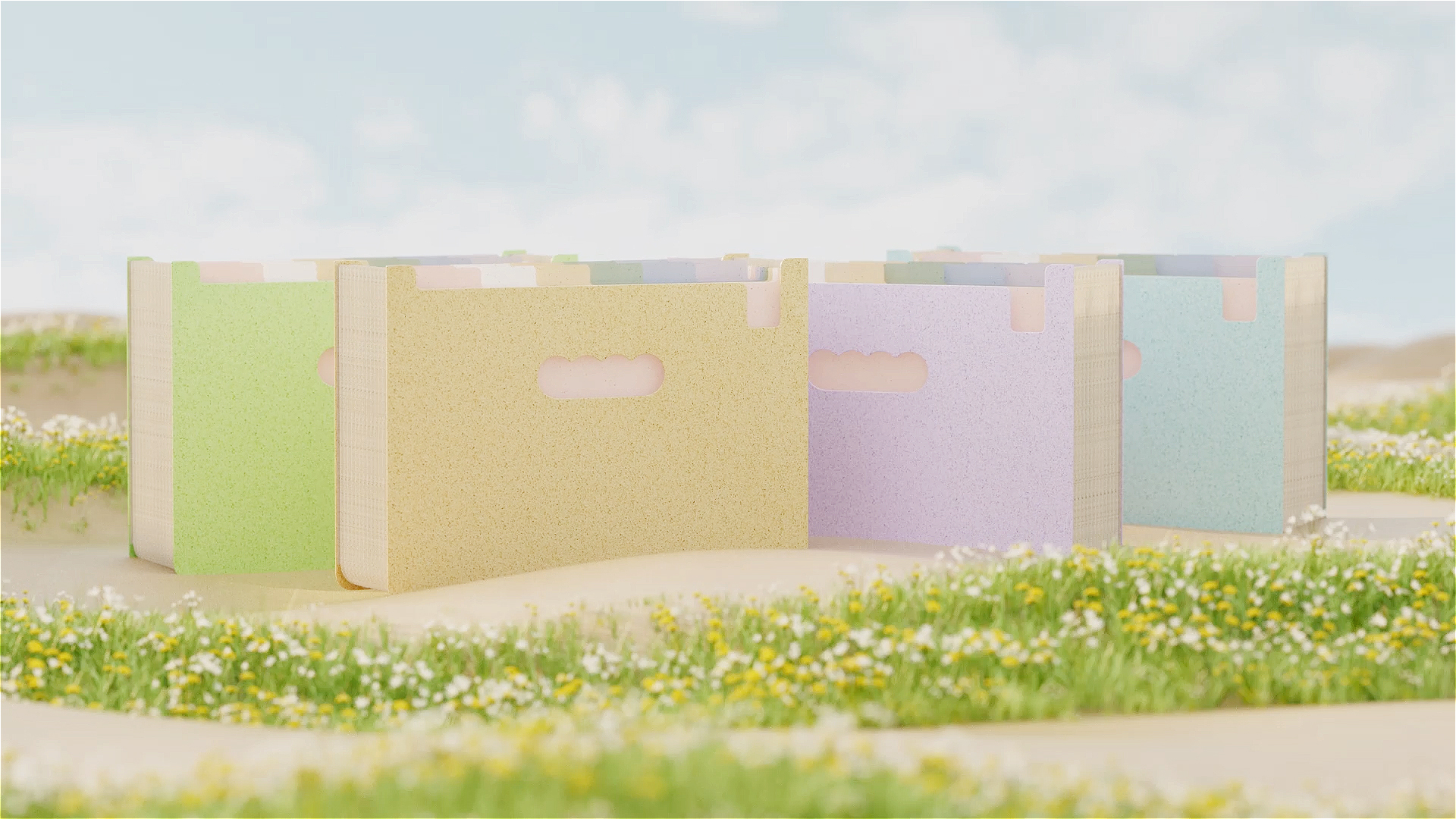





In an era of material and informational excess, true luxury and freedom are not born from limitless acquisition, but from the conscious act of defining what is "enough." The act of organizing our physical space is not just a chore; it is the perfect starting point and a powerful metaphor for practicing this "aesthetics of enough," a philosophy that leads to profound mental liberation.
Part I: The Introduction — The Trap of "More"
It's a familiar modern scene: a closet full of clothes yet "nothing to wear," a barrage of news feeds leading not to enlightenment but to anxiety, and new storage solutions quickly filled with things we don't use. We relentlessly pursue more, yet it often leaves us with less—less satisfaction, less time, less peace.
Why does this happen? The path to calm and effectiveness may not lie in expansion, but in definition. It is not about deprivation, but about the active, intentional choice of "Enough." This is an aesthetic—a way of seeing and shaping our world that finds richness not in quantity, but in quality and meaning.
In an era of material and informational excess, true luxury and freedom are not born from limitless acquisition, but from the conscious act of defining what is "enough." The act of organizing our physical space is not just a chore; it is the perfect starting point and a powerful metaphor for practicing this "aesthetics of enough," a philosophy that leads to profound mental liberation.
Part II: Deconstructing the "Aesthetics of Enough" — How Limits Create Freedom
This philosophy is supported by insights from multiple disciplines, revealing that boundaries are not cages, but frameworks for a richer life.
The Philosophical Lens: Frameworks as Liberation
The French philosopher Simone Weil observed that "attention is the rarest and purest form of generosity." Unlimited choices scatter our attention, diluting its power. Consider the structure of a sonnet or the rules of a musical form. These limits do not stifle creativity; they channel and intensify it. Similarly, setting a boundary for our possessions—"I will keep only the books that fit on this shelf"—is not a loss. It is a creative constraint that forces curation, ensuring that what remains is truly meaningful and loved.
The Psychological Reality: Decision Fatigue and Mental Quiet
Our willpower for decision-making is a finite resource, a concept famously explored in experiments on ego depletion. In a pivotal study, participants who used their willpower to resist tempting chocolates (while others ate radishes) showed significantly less persistence on a subsequent, difficult task. Their mental energy was depleted.
A cluttered environment is a minefield of these tiny, energy-sapping decisions. Every unsorted paper, every item without a home, silently asks: "What is this? Where does it go? Do I need it?" This is the chocolate and radish experiment playing out on your desk every day, leading to decision fatigue. A defined, organized space eliminates these micro-choices. It acts as a cognitive shield, conserving your mental energy for the decisions that truly matter in your work and relationships. The resulting quiet is not just in the room; it is in your mind.

The Design Principle: The Beauty of Negative Space
In art and design, "negative space"—the empty areas around and between subjects—is not merely blank. It defines the form, creates balance, and allows the eye to rest. It is essential to the composition's beauty and impact.
Physical organization is the creation of precious negative space in our lives. An empty expanse of desk, the breathing room in a wardrobe, a cleared countertop—these are not voids. They are visual and mental breathing room. They provide a backdrop against which the objects we truly choose to keep can be seen, appreciated, and used effectively. This space is where calm resides and focus flourishes.
Part III: Practicing the "Aesthetics of Enough" — From Space to Philosophy
Moving from theory to practice involves a shift in mindset, from disposal to conscious curation.
Start with Inquiry, Not Discarding The pivotal question changes from "Should I throw this away?" to "What constitutes 'enough' for the life I want to live?" and "Does this object support my vision of a meaningful life?" This reframes the act from one of loss to one of affirming your values and designing your future.
Establish Your "Enough" Standards
Functional Enough: Possessing the right tool for the task, not every possible tool.
Emotional Enough: Keeping items that spark genuine joy or memory, in a quantity that allows you to care for and appreciate each one.
Visual Enough: Arranging items with intentionality and breathing room, where each object can be seen as part of a curated whole.

See Limits as an Invitation to Creativity
Consider a jewelry box of a fixed size. This limit forces you to curate a collection of only your most loved pieces. Every time you open it, you encounter a selection that brings delight. This self-imposed limit is an act of curation. It transforms ordinary belongings into a personal exhibition of your history and taste, elevating daily routines into rituals of meaning.
Part IV: Conclusion — Freedom Lies on the Other Side of the Limit
The "Aesthetics of Enough" is not minimalism or frugality. It is conscious life design. By setting compassionate boundaries for our possessions, our information intake, and even our schedules, we are not relinquishing freedom. We are liberating ourselves from the burden of "more."